To send a parcel abroad from Nepal you need four things: a box packed so it survives the journey, a declaration that describes the contents honestly, government ID in your own name, and a courier that actually serves the destination at a price you’ve checked against others. That’s it. Everything else in this guide is detail on those four.
Most first-time senders get it wrong in the same place, and it isn’t the packing. It’s the declaration — a vague one is the single most common reason a parcel gets opened, delayed, or reassessed at the far end.
How to send a parcel abroad from Nepal, step by step
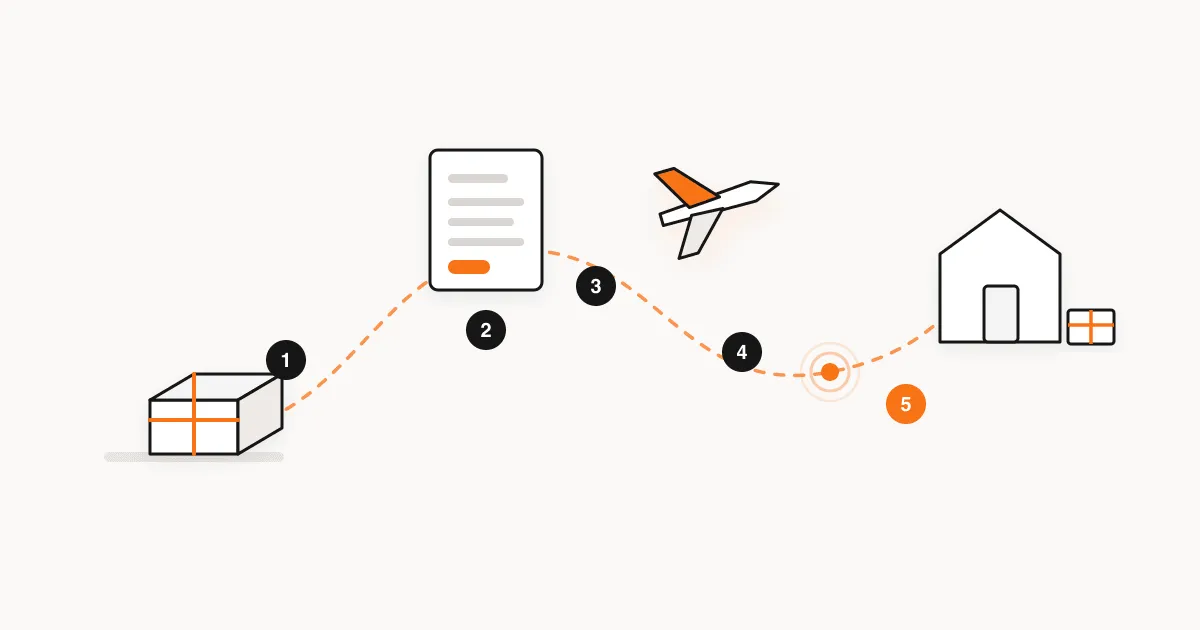
Five steps, and a phone is enough for all of them. This is how it runs on Hyre, which is a comparison and booking platform rather than a courier company — the parcel itself travels with the same established courier and cargo firms it always would. What sits on top is one screen showing what each of them charges for your particular box, and one place that keeps the booking, the payment and the tracking together afterwards.
The order is deliberate, and it’s the reverse of how a counter works. Price first, paperwork last. You shouldn’t have to hand over your documents to find out what something costs.
-
Select destination and weight
Enter where the parcel is going and roughly what it weighs. That is enough to price it — you don't need an account yet.
-
Compare courier rates side by side
Every available courier comes back at once with its price and delivery estimate, so you choose on the numbers instead of ringing around Thamel.
-
Fill in the package details
Package type, dimensions, actual weight and any special handling — fragile, perishable, documents only.
-
Submit KYC and consignee details
First-time senders upload ID once and add the recipient. Nepali outbound shipments require sender identification, so this is a legal step, not a formality.
-
Confirm, pay and track
You get a waybill number the moment the booking is confirmed, and the shipment tracks end to end from pickup to delivery.
Nothing in the first two steps costs anything or asks who you are. A destination and a rough weight are enough to see prices, so a shipment can be costed out before there’s an account or a card involved. And the ID at step four happens once — it’s collected on your first shipment and reused on every booking after that, which is not what most people assume when they see it.
That’s the booking. The rest of this guide is what happens on either side of it — getting the box ready before, and getting it through customs after.
Before you book: pack it, weigh it, measure it
Pack for the journey, not for the room it’s leaving. A parcel from Kathmandu to Sydney gets handled by a dozen people and rides in at least two aircraft holds. Double-wall cartons for anything fragile, cushioning on every side so nothing touches the wall of the box, and tape across every seam. Original retail packaging is not shipping packaging.
Weigh it and measure it before you get quotes. Every carrier prices on chargeable weight — the greater of what the box weighs and what its size implies it should weigh. Get length, width and height in centimetres along with the weight on a scale. If the box is big and light, expect to be charged on the volume rather than the weight, and consider repacking into something smaller before you price anything.
Check the item is allowed to travel. Two separate lists apply and they’re unrelated to each other: what Nepal restricts on export, and what the destination restricts on import. Batteries, food, cosmetics, seeds and anything liquid cause more holds than exotic items do. Our guide to what you can’t ship from Nepal covers the export side, and the shipping policy covers what our partners will and won’t carry.
Filling in the customs declaration
This is where parcels go wrong, so it’s worth doing slowly. The declaration is what a customs officer at the far end reads instead of opening your box. A good one keeps the box shut.
| Gift | Cotton pashmina shawl, 1 pc, NPR 3,500 | “Gift” describes a relationship, not an object. It gives the officer nothing to assess, and it does not qualify the parcel for gift relief either. |
|---|---|---|
| Personal items | Cotton kurta, 2 pcs, NPR 1,800 each | Vague contents are the most common trigger for a physical inspection, and an opened parcel is a delayed one. |
| Sample — no value | Handicraft sample, 1 pc, NPR 500 | Nothing has zero value to customs. A nil declaration invites the officer to put their own figure on it. |
| Important papers | Academic transcript, sealed envelope, no commercial value | Correspondence is generally exempt from duty, but only when the form says plainly that is what it is. |
| Pashmina shawl, 1 pc, NPR 500 | Pashmina shawl, 1 pc, NPR 3,500 | Specific but understated is its own mistake. An undervalued parcel gets reassessed with a penalty, and it caps any insurance claim at the figure you wrote. |
Put a copy of the invoice inside the box as well as in the documents pouch on the outside. If the outer one gets torn off in transit — and it does — the inner one is what keeps clearance moving instead of stalling.
Your ID, and why it’s required
Anything leaving Nepal for an international destination has to be traceable to an identified sender. That’s a requirement on the courier and on customs, not a preference of any one platform, so every legitimate route out of the country asks for it somewhere.
Booking through Hyre, you upload ID once on your first shipment and every booking after that reuses it. Citizenship certificate, passport or national ID all work. It takes a few minutes and then it’s done permanently — which is worth knowing, because the fear that it’s a per-shipment chore puts people off unnecessarily.
What it costs, and why quotes differ so much
Four things set the price: where it’s going, its chargeable weight, which company carries it, and when you send it. The first two are yours to control — the third is what varies far more than people expect.
There’s no published tariff for international parcels leaving Nepal, so each company prices off its own costs on that route in that week, and those costs genuinely differ. A firm holding allocation to the Gulf will beat one that doesn’t; the same firm can be poor value to Toronto. That’s not anyone behaving badly. It just means a single quote tells you nothing about whether it’s a good one, which is why we put every available rate side by side instead of quoting you our own.
Timing matters more than most people realise, too. Dashain and Tihar compress a year’s gift traffic into a few weeks, and space on outbound routes gets tight exactly when everyone needs it. Sending in the last week before a festival costs more and moves slower.
If your shipment is large, dense or commercial, price air cargo alongside courier before you decide — the economics change completely at volume, and cargo versus courier walks through where the line sits.
After it ships: tracking, duty and delivery
You get a waybill number the moment the booking is confirmed. Keep it. It’s the first thing any courier, customs office or recipient will ask for if anything needs chasing.
Tell your recipient two things before the parcel lands: the tracking number, and that there may be a charge to pay on arrival. Couriers out of Nepal ship DDU — delivered duty unpaid — so the duty and local tax are the receiver’s bill, not yours. A one-line message prevents almost every refused delivery, and a refused delivery means return freight charged back to you. The full guide to who pays customs duty has the thresholds country by country.
How do I send a parcel abroad from Nepal?
Pack and weigh the parcel, then compare courier rates for your destination and weight — that needs no account. Choose a courier, enter the package details and the recipient, upload government ID if it is your first shipment, then pay and get a waybill number. The parcel is collected and tracked from pickup through to delivery.
What documents do I need to send a parcel abroad from Nepal?
Government ID in the sender’s name — citizenship certificate, passport or national ID — because outbound international shipments must be traceable to an identified sender. You also need a customs declaration listing each item with quantity, material and value, and for commercial goods a commercial invoice. Personal shipments do not need an export licence.
How much does it cost to send a parcel abroad from Nepal?
It depends on the destination, the chargeable weight and which courier you use, and there is no single published tariff — quotes for the same box from different companies can differ substantially. Comparing the available rates for your specific destination and weight is the only reliable way to know what a fair price is, and it takes a minute before you commit to anything.
How long does a parcel take to reach its destination from Nepal?
It varies by courier, by destination and by whether the parcel is held at customs on arrival, so the delivery estimate shown next to each quote at booking is the figure to work from rather than a general rule. Customs clearance at the far end is the step most likely to add unplanned days, and a clear declaration is what shortens it.
Who pays customs duty on a parcel sent from Nepal?
The receiver, on a standard shipment. Couriers write the waybill as DDU — delivered duty unpaid — so the sender covers the freight and the receiver pays whatever their own customs authority assesses on arrival. You can reverse this by booking DDP, where the courier settles the charges abroad and bills them back to you with a handling fee.
Can I send documents rather than a parcel?
Yes, and it is one of the most common things sent abroad from Nepal. Transcripts, certificates and sealed credential envelopes are priced by weight like anything else, so they are among the cheapest things to send. Declare them as documents, keep the envelope free of anything that is not paper, and always send them tracked.
Do I need an account to check prices?
No. Enter the destination and a rough weight and the available rates come back with delivery estimates beside them. An account is only needed once you decide to book, so you can price a shipment as often as you like without handing over any details.
- #send parcel abroad
- #courier nepal
- #international shipping
- #logistics nepal